Showing posts with label trains. Show all posts

Thursday, August 1, 2013

Back to the future: Vintage rail bike

Sometimes the best ideas come from history. Here's one I stumbled across recently: the Teetor bicycle rail car, introduced in the U.S. in 1895 and produced for many years thereafter.

This conveyance is similar to the hand cars that were used by train crews to conduct track maintenance. But for some reason, this bicycle-powered version, though probably far more efficient, is far less well known.

The two-seater show above weighed 75 pounds, and a single-seater was also offered that weighed only 60 pounds. The possibilities represented here are significant. Such a vehicle would be easy to move on and off the rail when necessary, and could be pedaled with ease, given the low rolling resistance between wheels and train tracks.

Imagine this device upgraded with the modern materials and engineering in today's bicycles. It could be far lighter, perhaps collapsible for easier transport, adjustable for different track widths, and geared for better climbing.

Of course there would be legal problems with actually using such a bike on train tracks today, which are all controlled by private railroads and government transit systems. But maybe someday, when fossil fuels are are all spent, this is how we'll travel.

The above photo is borrowed from "A History of the Railroad Hand Car" by J.H. White Jr., a pamphlet published in 1972 by The Railroad & Locomotive Historical Society Inc. at Harvard Business School. Special thanks to Bernard Mergen for the reference.


Monday, March 19, 2012

Why blog: Trains & hiking

I've been a hiker and backpacker for more than 30 years. That's a lot of trips. Every one of those trips began by getting into a car. Lately that is changing.

I've started looking for hikes accessible by train. Here are some reasons:
  • The experience. The train follows a different route than the highways, and you see a lot more than pavement and other cars as a result. You can't stop whenever you want to rest or explore a detour. Yet the entire trip is restful, because you don't have to think about the traffic. And the entire trip is a sort of a detour, because the views are much better
  • Self-sufficiency. While a car, on the surface, may seem the more self-sufficient path, in reality it becomes a crutch. You can always throw more equipment in the car just in case you might might need it on the trip. But traveling by train, you really have to rely only on what's in your pack, and on your skills and knowledge to adapt to conditions beyond that.
  • It's greener. Short of walking or biking to the trailhead, the train is the greenest way to get there in terms of greenhouse gas emissions. 

There's no question preparing for these kinds of trips is more difficult. You are limited to train schedules and routes. That's a downside. But I've discovered an upside: The experience of stepping off the train with just a pack on your back, and quietly slipping into the woods just a few minutes later, is priceless.

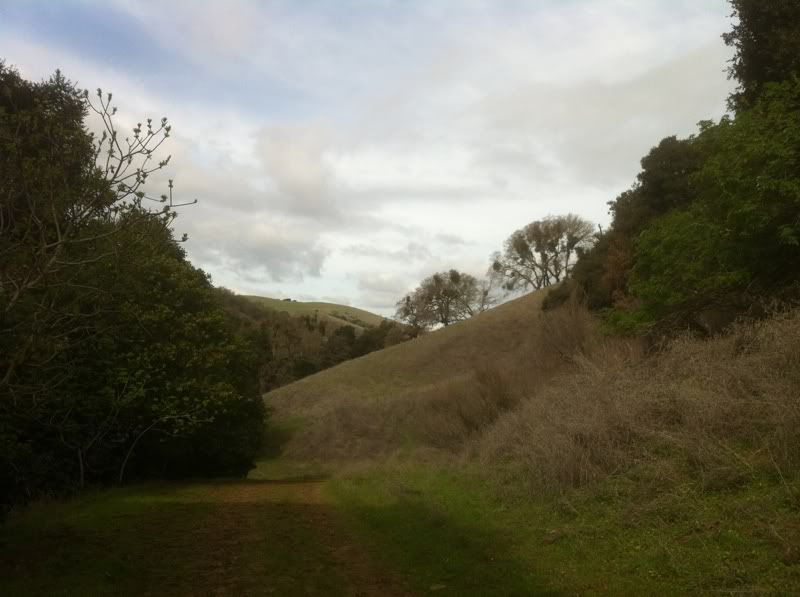
I'll be sharing some of these trips in the weeks ahead so you can try it yourself. Maybe I'll even publish a guidebook eventually. For now, here's a teaser photo from one of these recent treks (details to come).


Tuesday, March 6, 2012

Train to trail

I'm starting a series on hiking trips reached by train rather than car. I've been a longtime hiker and backpacker, but as the world gets more crowded and polluted, I'm less inclined to want to drive to the trailhead. Still, getting outdoors, out of the city and away from the crowds are important to my sanity. I also enjoy traveling by train and rarely get to do it much. So, we have a convergence.

For me, enjoying the outdoors is about getting away from civilization, and when I begin such a trip by car, I feel a disconnect. The traffic is dispiriting and stressful. Parking at the trailhead is often fraught with anxiety and tension. There is also an inherent conflict in relying on an automobile to get outdoors, which should be about being more independent and self-sufficient, not less.

There are also the climate change implications, of course. Train travel is one of the lowest-impact means of travel where greenhouse gases are concerned. Seems to me if you enjoy the outdoors and want to continue doing so, reducing your carbon footprint on the way there is something important to consider.

One big limitation, obviously, is that are fewer trailheads reachable by train. But it may be a restriction worth accepting. And maybe, in the long run, it will be remedied with more train routes and better schedules as more people try this mode of travel.

I plan to document these trips on the blog. My goal is to eventually offer a "train-to-trail" guidebook. I think there will be value in this, as I am find out that getting to good hikes by train isn't always easy.

As a teaser, here's a photo from my first trip, which ended up being a fascinating kickoff and a great introduction to the issues and contradictions embodied in the concept.

The Shell Oil refinery in Martinez, Calif., shot from the window of the Amtrak Capitol Corridor train just before touching down for the first hike:


It's probably not the sort of photo you were expecting. But it does offer food for thought.